
Want to enjoy your garden in privacy? Our Seasonal Plant Department Manager Ash Baines shares his tops tips for using screening plants to create an outdoor sanctuary.

It’s a question I’m asked all the time. How can I make my garden more private when I am overlooked by neighbours?
Many new-build homes are surrounded by windows so their outdoor spaces lack much-wanted privacy. It can be tempting to think big and plant a row of tall conifers around your boundary but you risk making your garden feel smaller and blocking out light.


Instead of shutting out the world completely, it’s much more effective to layer different plants, shrubs and trees to add seclusion. Unlike fences or walls, planting offers a softer, more organic form of screening.
I like to start with a tall, back layer of evergreen trees or hedges, followed by a middle layer of medium-sized shrubs, and a front layer of low-growing perennials or grasses. This layered approach adds depth and privacy without creating a solid, imposing wall of greenery.
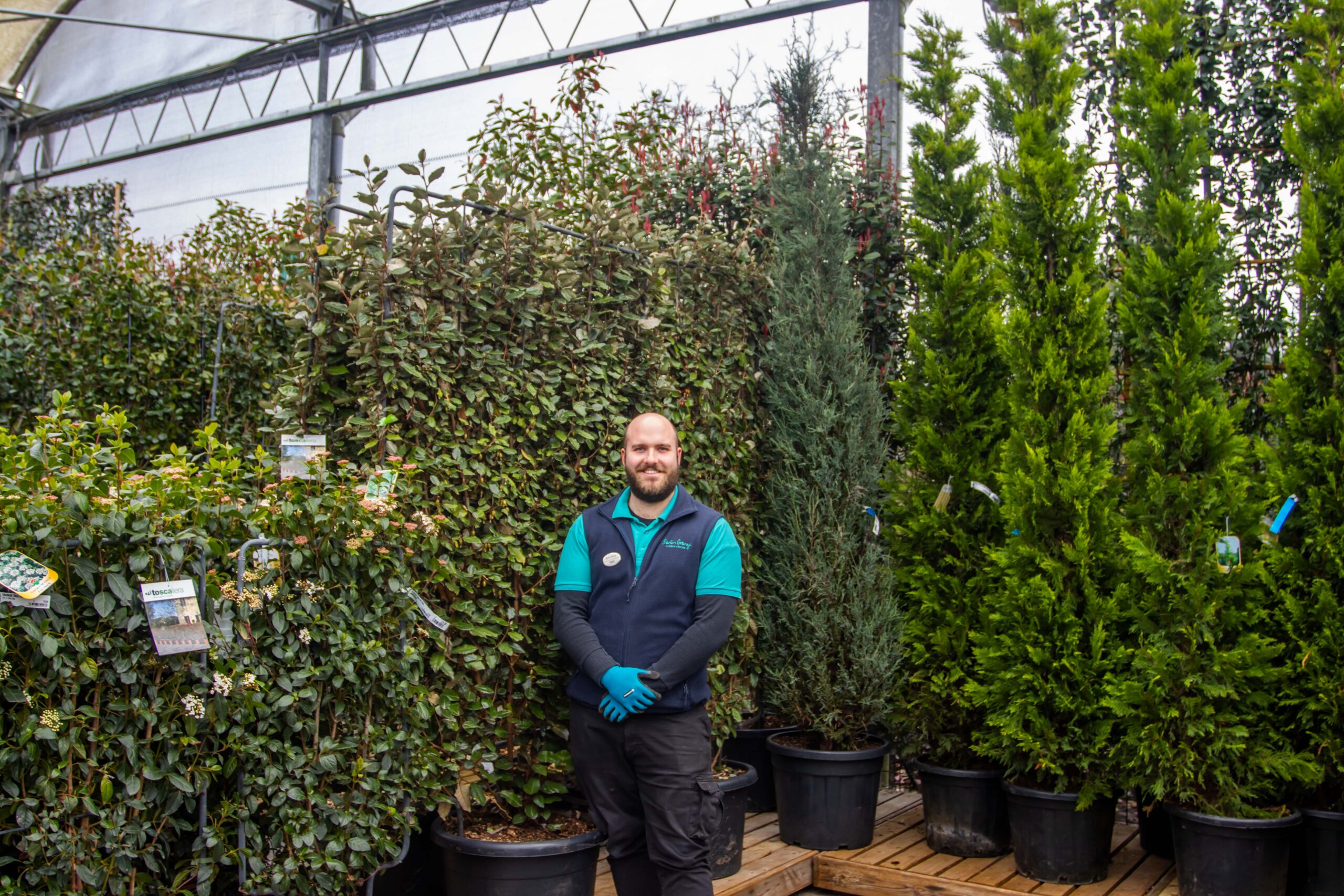
Staggering the trees, rather than planting in a straight line, will also make the garden feel more natural and relaxed. Some of my favourite choices for evergreen privacy are Cherry Laurel, Italian cypress and Arborvitae.
For smaller gardens, a row of pleached trees works really well. These on-trend styles are very thin and trained in a frame so they fit nicely over a fence or wall without spilling into the garden. Varieties like Oleaster or Photina Red Robin provide year-round coverage, while deciduous options like Hornbeam or Hazel offer seasonal privacy.

Another option that works well in compact spaces is to install a planter with a trellis. They are such a versatile way to add privacy and you can plant anything in a screen planter.
Or for a quick and quirky way to fill your trellis with colour, buy some hook-on pots and fill with bright geraniums and trailing plants. This option gives you so much scope for changing your privacy screen from season to season.
Remember it’s easy for plants to dry out in pots, so excellent drainage, quality mulch and regular watering are essential.
For most of us in Lancashire, our gardens are mainly used in the warmer months so evergreen foliage isn’t always essential. I love a live willow hedge as a beautiful natural screen.
And if your garden is big enough, consider planting a tree centrally. A Cornus kousa for example provides lovely screening and helps to enclose a dining area while providing shade and texture.
Once your privacy screen is blooming, make sure to do some light trimming as the trees and shrubs grow to keep them dense. This will protect your privacy for many years to come.